No. 001May 2, 2026 · 7 min read
The Forests of New Hampshire
How a state of trees became a state of craft.
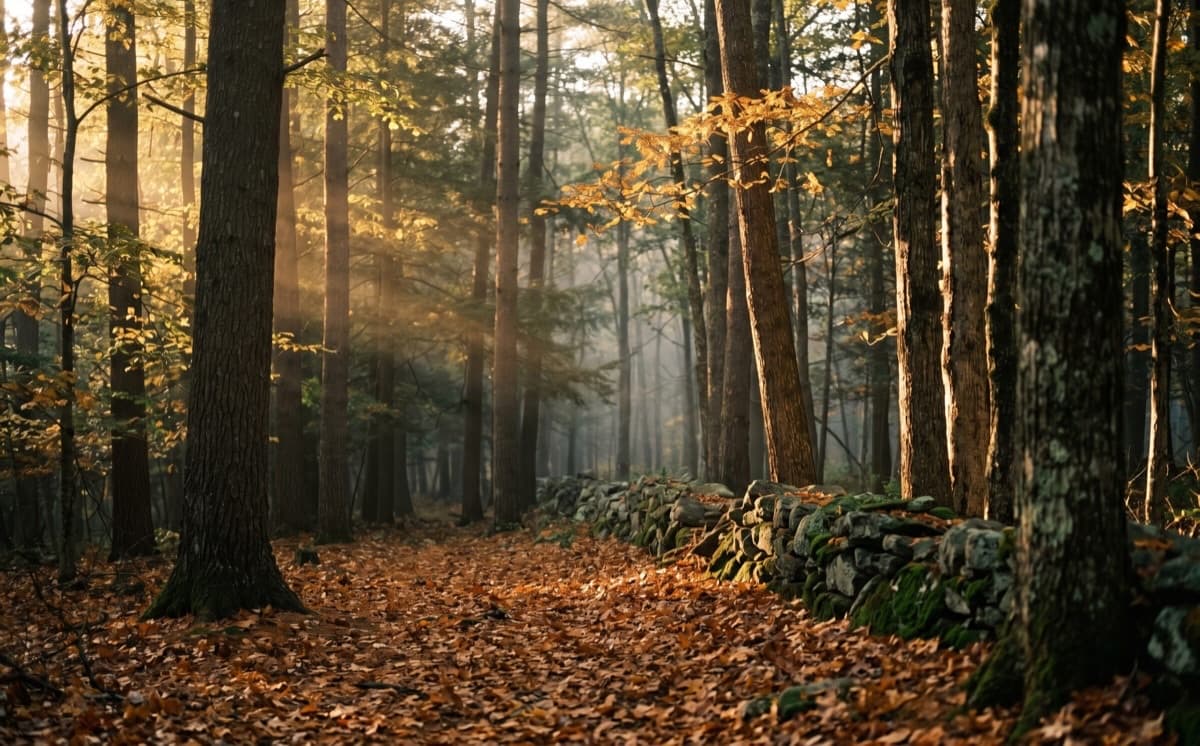
Eighty-four percent of New Hampshire is forest. That's not a brochure number. It's the second-highest of any state in the country, and almost all of it is the second forest, the one that grew back.
When the first surveyors walked north out of Massachusetts in the 1600s, they walked through a cathedral. Eastern white pines stood two hundred feet tall. American chestnuts edged in along the southern hardwoods. The great northern hardwoods, sugar maples and beeches and yellow birches, covered hills that wouldn't see daylight again for a century.
The British crown noticed the pines first. A 1722 act reserved every white pine over twelve inches in diameter for the Royal Navy, tightening an earlier rule that had set the threshold at twenty-four. The King's Pines, they were called, cut into masts and shipped down the Piscataqua. New Hampshire colonists protested by riot. The Pine Tree Riot of 1772, in Weare, was one of the first acts of open resistance to the crown. Three years later, the same temper walked to Lexington and Concord.
The clearing
By the late 1800s much of New Hampshire had been cleared. Sheep farming had stripped the lower elevations — by the 1850s perhaps seventy percent of the land south of the White Mountains was open ground. Logging stripped the rest. Photographs from the 1890s show the White Mountains nearly clearcut, slopes the color of a brushed-out hide.
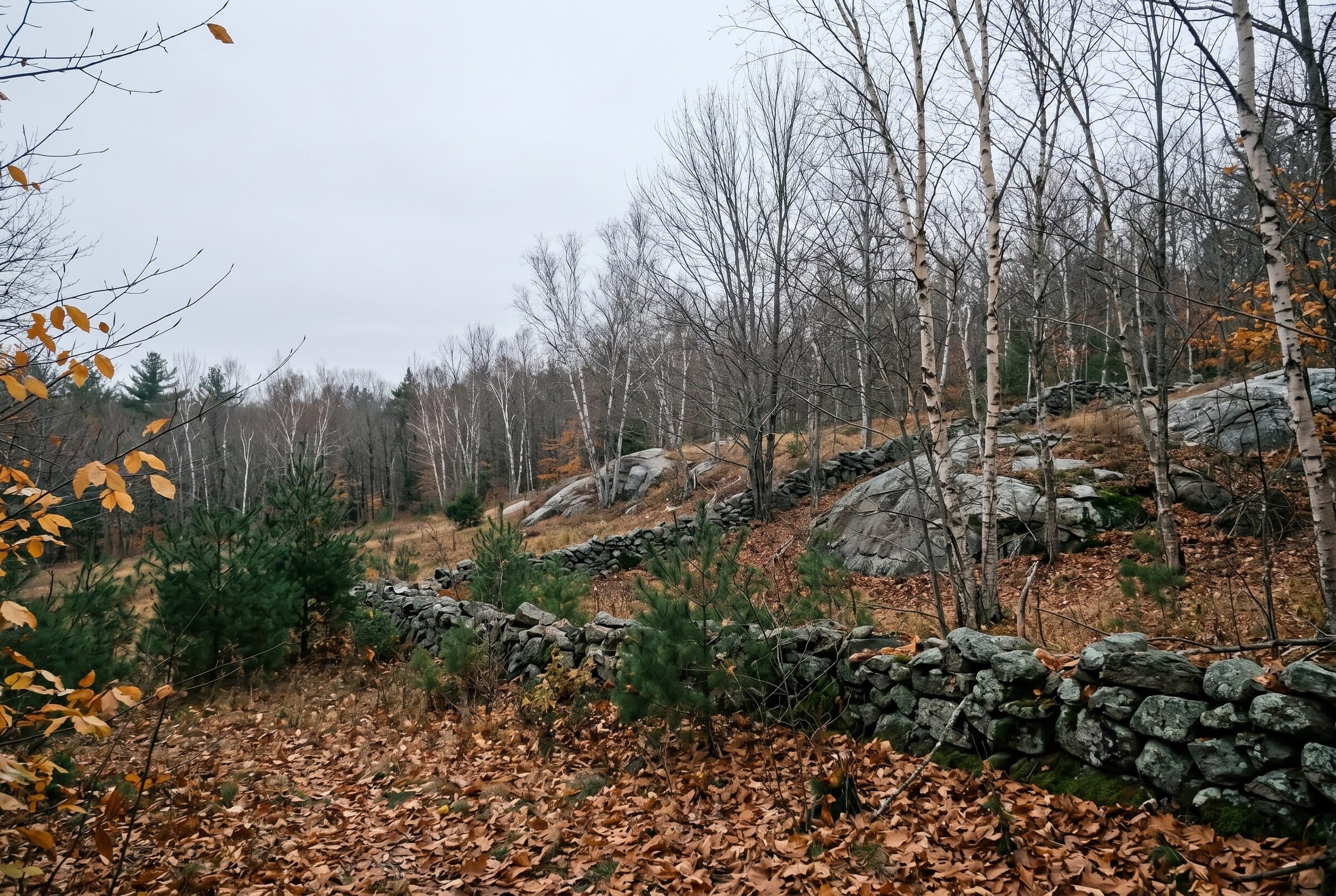
The Weeks Act of 1911, sponsored by John W. Weeks — a Massachusetts congressman who had grown up in Lancaster, in the north country — created the legal framework for the eastern national forests. The White Mountain National Forest followed. Sheep farms collapsed and the trees came back. Not the cathedral, but a younger, mixed forest. Cherry seeded in along the abandoned stone walls. Beech and birch crept up the slopes. The white pine returned in a hurry, the way it always does.
“Almost every piece of wood that comes through this shop has a stone wall in its lineage somewhere.”
What the second forest gives us
The wood that a New Hampshire turner works with today is, almost entirely, the wood of that returning forest. It is younger than its great-grandparent trees but stranger. Grown crooked around old fence wire, knotted around scars where horses once rubbed, spalted where it lay too long on a wet floor. It is wood that remembers being a sheep pasture.
- Eastern white pine. The state tree, light and warm, easy on a tool, the wood of meeting houses.
- Sugar maple. Dense, mute, takes a finish like glass. The syrup tree.
- Black cherry. The figured one, dark with age, the patient wood. The burls in particular.
- American beech. Pale and quiet alone, but spectacular when fungi have drawn through it.
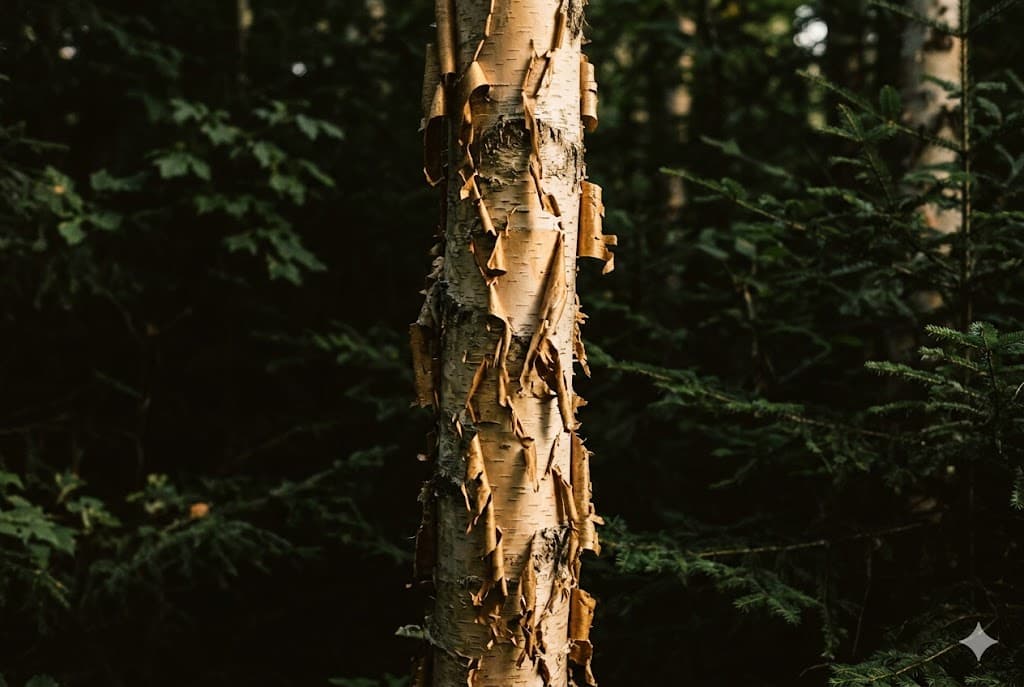
- Yellow and white birch. Fast, light, papery, full of motion.
- Black walnut. Almost rare here, almost always a yard tree, almost always taken down for a road.
Burl hunting
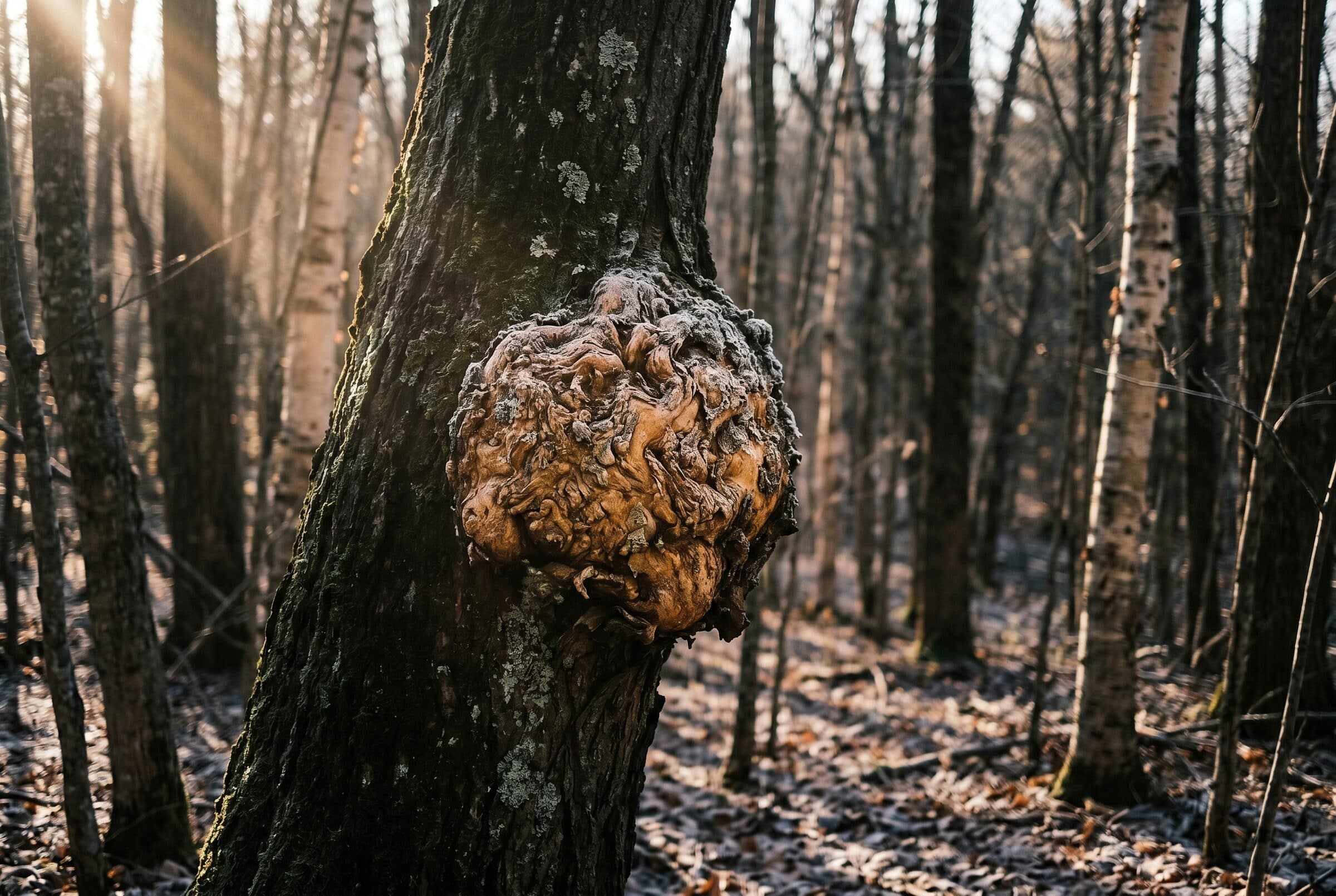
There is a particular kind of looking the woods teach you. A burl is a tree's reaction to injury, a swirled, knotted mass of grain that bulges out of a trunk where the wood was once wounded. They are uncommon enough that finding one feels like a gift, and ugly enough on the outside that most people walk past them.
Burl hunting is mostly looking. Fall is the best season. Leaves down, light long, every bulge in a tree visible from a hundred feet. You walk public ways — a logging spur, an old class-VI road, the edge of a wetland — and you note what you see. The cutting comes later, and only with permission. In New Hampshire every tree belongs to whoever owns the ground beneath it, and removing a burl without the landowner's word is timber trespass under state law. So the knock is on a door, not a trunk. Most often the wood comes back years later, when the tree has come down on its own and the owner remembers a turner once asked about it.
Salvage as a method, not a marketing line
Every piece in this shop comes from a tree that was already going to ground. Storm-fall, ice-fall, a yard tree being taken for a driveway, a burl found years after its tree had died. Nothing here was cut for craft.
In practice that means most of the wood arrives by phone. A landowner whose maple split in an ice storm. An arborist clearing a hazard tree from a driveway. A town crew cutting back a road after a nor'easter. Nothing comes off the White Mountain National Forest, off the state forests, or off the state parks — public land here is for walking, not for harvesting, and the federal personal-use permits that exist are for dead-and-down firewood, not for standing trees or burls. Even on private land, every log moves with the owner's word first, in writing where it can be.
Partly that is an ethic. Partly it is just how a small workshop in the Lakes Region of New Hampshire actually gets its wood. The forest is generous if you let it set the pace.
More than anything, a turned bowl is a way of paying attention to a place. The forest gives you a log. You give it back as a form. The grain you see in the finished piece was already in the tree, sixty or eighty or a hundred years before any of us were here. The lathe just lifts it into the room.
From this writingThe bench
See the pieces it
points to.
Every wood in this post is on the bench right now. Birch, maple, cherry burl, walnut, beech, and white pine.
Browse the bench