No. 003February 14, 2026 · 7 min read
The Burl, Explained
On the biology of a tree's most beautiful injury.
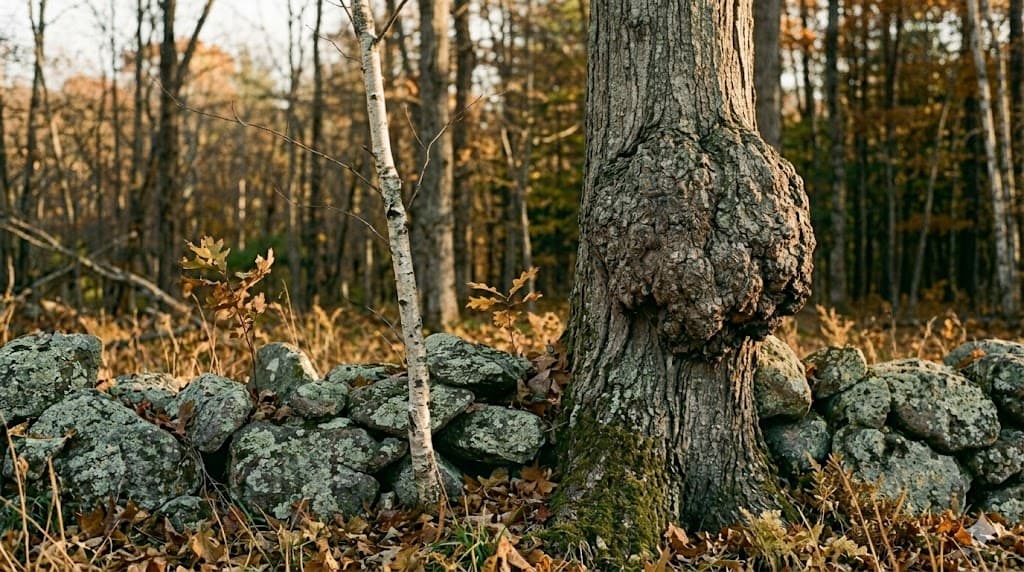
A burl is a tree's record of a question it could not answer.
From the outside a burl looks like a wart. A swollen, knotted mass on the side of a trunk, sometimes the size of a fist, sometimes the size of a kitchen table. From the inside it is a small chaos. Grain that should run straight runs in circles. Wood that should be thirty percent water is closer to forty. Color that should be uniform is mottled and figured, full of tiny dark eyes. Of all the wood a tree produces, a burl is the only piece that is entirely the tree's own answer.
What causes one
There is no single cause. A burl is a callus mass — extra wood the tree grows around an injury or irritation — but the irritation may be insect, fungal, viral, bacterial, or mechanical. In some species the predisposition is partly genetic. In others it follows a single visible wound. What most burls have in common is an unusual concentration of dormant buds, the small cell clusters a tree keeps in reserve in case a branch fails. Each bud, once activated and then suppressed again, leaves a tiny eye in the figure. A piece of burl wood is in part a portrait of every branch the tree decided not to grow.
The mechanism is still being studied. Recent work on coast redwood points at a complex of pathogens working together with the tree's own bud-suppression hormones. Older European studies on walnut and birch found agrobacterium-like organisms in the tissue. None of the explanations are clean. The current best guess is that several routes lead to the same answer.
Where they grow
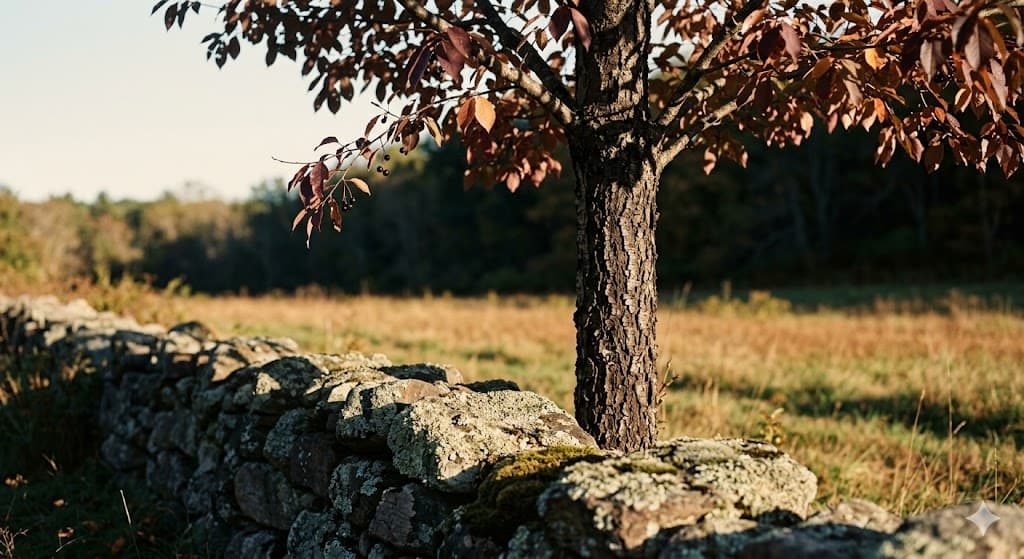
- Black cherry. Common in New Hampshire stone walls and old pasture edges. The burls show a deep red-amber and a tight eye figure.
- Sugar maple. Less common but exceptional. The figure runs from quilted to fiddleback to a dense bird's-eye.
- Yellow birch. Cold-country burls, often with a soft golden cast.
- Black walnut. Rare here, usually a yard tree, almost always claimed before the saw.
- White oak. Heavy and slow, with a tight, restrained figure.
- And, far from here: redwood and big-leaf maple in the Pacific Northwest, English brown oak stained by the beefsteak fungus, Australian banksia. The world's most famous burls are not New Hampshire burls.
Weight, water, and the tool
Burl wood is denser than the wood around it, sometimes by a quarter or more. It is also wetter, often by ten percentage points. On a lathe the interlocked grain is forgiving in some places and merciless in others — a sharp gouge will cut clean for a foot and then catch on a hidden eye. A turner takes the first cuts as a series of light passes, listening more than looking. The wood teaches the tool, not the other way around.
“A bowl from a burl is older than the burl itself. The tree had to live long enough to make the wound, and then long enough again to grow around it.”
Why most of these come down with the tree
There is a temptation, looking at the figure, to remove a burl from a living tree. It is almost always a mistake. A burl is part of the tree's structural envelope, and the wound left behind is an open invitation to every fungus the spalting story warned about. A burl harvested from a tree felled by a storm, or from a yard tree being taken for a driveway, is a gift. A burl cut from a tree still standing is usually the slow killing of a hundred-year cherry for a single bowl. The good burls in this shop are the ones that came down with the tree.
From this writingThe bench
See the pieces it
points to.
Every wood in this post is on the bench right now. Birch, maple, cherry burl, walnut, beech, and white pine.
Browse the bench